This year, I was chosen to speak at Ignite UX about a topic very near to my heart – simplification. I had submitted an idea for a talk about how simplifying your life can make you a better designer. It was a fun challenge! The talk had to be 5 minutes, with slides automatically advancing every 15 seconds.
PRESENTATION:
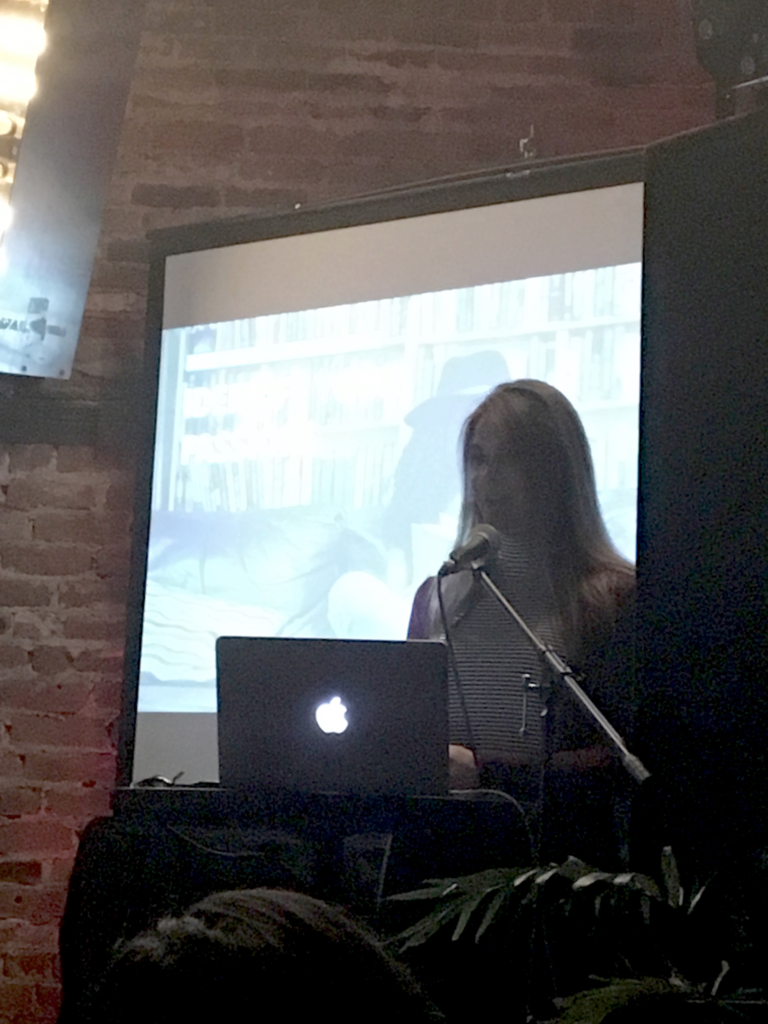
And here’s the only proof I actually spoke because their video recording system went down during my talk! I’d like to think my talk was just that earth shattering…
TRANSCRIPT:
- Simplified Life, Better Design.
Hey, I’m Nina Schell. I’m a UX Lead at Thomson Reuters, and I’d like to talk about methods I’ve used to simplify my life in 5 key areas that have made me a better designer and (arguably) human along the way.
- Principle #1: Increase Self Awareness
First, I needed some observational data. I noticed patterns in how different activities and habits impacted me physically and mentally, and I used Whole30 to see how different foods affect me.
- What energizes you?
I recorded which work activities engaged and energized me, and started thinking about how I could incorporate more of those into my job, and how I could schedule my workday to optimize my energy levels.
- Identify your passions.
I noticed what I stayed up late to read about, and what issues tugged on my heartstrings most. I realized I cared about giving kids an equal start in this world, and acting on that passion actually broadened my view of the world.
- Principle #2: De-clutter your mind
I found out there’s a lot floating around in our minds, whether we’re aware of it or not. I learned to get it all out, and come to grips with it regularly through journaling, meditation, prayer, therapy… whatever works for you.
- Guard your mind
It’s like “garbage in, garbage out”. What I read, see, and watch changes how I act and think. So I can’t mindlessly consume media – I have to strategically consume things that I want to become part of me.
- Be kind to yourself
You talk to yourself more than anyone else in the world, so what you say matters. When I notice I’m talking down to myself, I try speaking in third person, or thinking about if I’d say that to a child – that changes my tone and perspective.
- The benefits of a de-cluttered mind
Having a clear mind makes us aware of the emotions and self-talk we bring to work, which makes critique and collaborating less personal and more productive. Filtering what you consume helps you grow the way you want to.
- Principle #3: Declutter your physical environment
We own a lot of stuff. Last year, a large relocation company found that their customers never used ⅕ of the things they moved for them. They also found that Americans don’t wear 82% of the clothes we own.
- What sparks joy?
So I tried the KonMari method and made my own decluttering routines. Challenge yourself to wear the next thing hanging in your closet, for example. Keeping stuff that you never use and doesn’t “spark joy” weighs you down.
- Be conscious of society
It shows we don’t value what we buy… so what’s driving us to buy? I think it’s our culture and the tactics used to influence our behavior. Keeping these in mind makes me a more careful consumer and designer.
- End unnecessary distractions.
And it’s not just stuff we own – it’s the distractions. A 2014 study found on average, we get 64 notifications a day. That’s over 4 per waking hour. How can our limited willpower and concentration handle that?
- We can’t handle it.
I’d be in over my head if it weren’t for Do Not Disturb mode. One by one, I decide if the notification is worth the loss of deep work. It also helps me think about how my UX work factors into that chaos.
- Principle #4: Prioritize everything.
I morbidly like to remind myself that we’ve got a finite amount of time to live. Each square represents a week in a 90 year life. I highlight the weeks I’ve lived, and the blank ones are waiting for me to decide how to fill them.
- How you use time
That is, if I decide. Time is the greatest gift you have. How you use it is how you’re deciding to spend your life. Are you okay leaving that up to notifications or emails you get that day? Or the meetings someone put on your calendar?
- Take control of your life/calendar
I say, be ruthless and prioritize everything. Schedule time for things that make you feel alive (if you’re not doing them). If you need time to get things done, block it off. I have to be intentional, or others will claim that time for me.
- Principle #5: Create margin
I found leaving wiggle room in my schedule, budget, relationship boundaries, and what I take on at work gives me freedom to be spontaneous, think creatively, work more efficiently, make mistakes, and help others.
- Rest & Free Time
Taking time to reset is a necessity, whether it’s a few hours, or a designated day every week. Create unstructured time blocks where you only do things that will make you feel refreshed. Hint: Netflix does not equal rest. - #Grateful #Blessed
Without reflecting, I take my life, work, and team for granted. I see design compromises instead of the joy of a released product. Being thankful changes my perspective so I can see the bigger picture. - In conclusion…
I’ve found simplifying forces you to choose what you value, and make room for things that spark joy and growth. It allows you to see your life and work clearly, know yourself better, and live more fully. Thank you for your time!